<https://gizmodo.com/the-telecoms-industry-spends-230k-a-day-to-make-sure-y-
1847324005> gizmodo.com
/the-telecoms-industry-spends-230k-a-day-to-make-sure-y-1847324005
The Telecoms Industry Spends $230K a Day to Make Sure Your Broadband Sucks
Brianna Provenzano2-3 minutes 7/20/2021
_____
Photo: Justin Sullivan / Staff (Getty Images)
If
<https://gizmodo.com/the-fcc-wants-to-hear-how-bad-your-internet-sucks-18465
31996> broadband in the United States sucks, you can thank the telecoms
industry, which is apparently so obsessed with maintaining our current
crappy internet infrastructure that it spent a combined total of $234
million lobbying against faster, cheaper competitors during the 116th
Congress.
According to a
<https://www.commoncause.org/wp-content/uploads/2021/07/CCBroadbandGatekeepe
rs_WEB1.pdf> new study conducted jointly by Common Cause and the
Communications Workers of America (CWA) union, telecoms giants spend nearly
$230,000 a day on average in the course of their work to thwart any
legislation that would disrupt their ironclad grip on the broadband
marketplace. Comcast - reportedly the worst offender - spent more than $43
million in the last congressional session alone, with AT&T trailing at $36
million spent.
"The powerful ISP lobby will seemingly spend whatever it takes to keep
politicians beholden to them and maintain a status quo that leaves too many
Americans on the wrong side of the digital divide," the two groups wrote in
their
<https://www.commoncause.org/wp-content/uploads/2021/07/CCBroadbandGatekeepe
rs_WEB1.pdf> combined report.
As the study notes, the largest internet service providers have "...used
their outsized influence in Congress to block any legislation that would
undermine their stranglehold over the broadband marketplace." Among the
telecoms giants' primary lobbying targets was the Save the Internet Act - an
initiative introduced by House Democrats in 2019 to reinstate the net
neutrality rules repealed by the Federal Communications Commission during
the Trump administration - as well as the aptly-named
<https://www.congress.gov/bill/116th-congress/house-bill/7302> Accessible,
Affordable Internet for All Act.
The end result of such meddling is that everyone's broadband is generally
much slower and more expensive - particularly the
<https://ilsr.org/report-most-americans-have-no-real-choice-in-internet-prov
iders/> 83 million Americans that live under a broadband monopoly.
G/O Media may get a commission
"For years, Congressional efforts to pass legislation needed to address the
nation's long-standing disparities in connectivity have been stopped dead in
their tracks in part because of aggressive industry lobbying and the
oversized political influence of the largest ISPs," Common Cause Media and
Democracy Program Director Yosef Getachew told
<https://www.vice.com/en/article/88ndzv/report-finds-big-telecom-spends-doll
ar230000-on-lobbying-every-day> Vice.
Eh, koliko smo u životu go*ana uludo potrošili...
https://www.reuters.com/world/asia-pacific/south-korean-toilet-turns-excrem…
South Korean toilet turns excrement into power and digital currency
Minwoo ParkJuly 9, 202111:56 AM CESTLast Updated a day ago
ULSAN, South Korea, July 9 (Reuters) - Using a toilet can pay for your coffee or buy you bananas at a university in South Korea, where human waste is being used to help power a building.
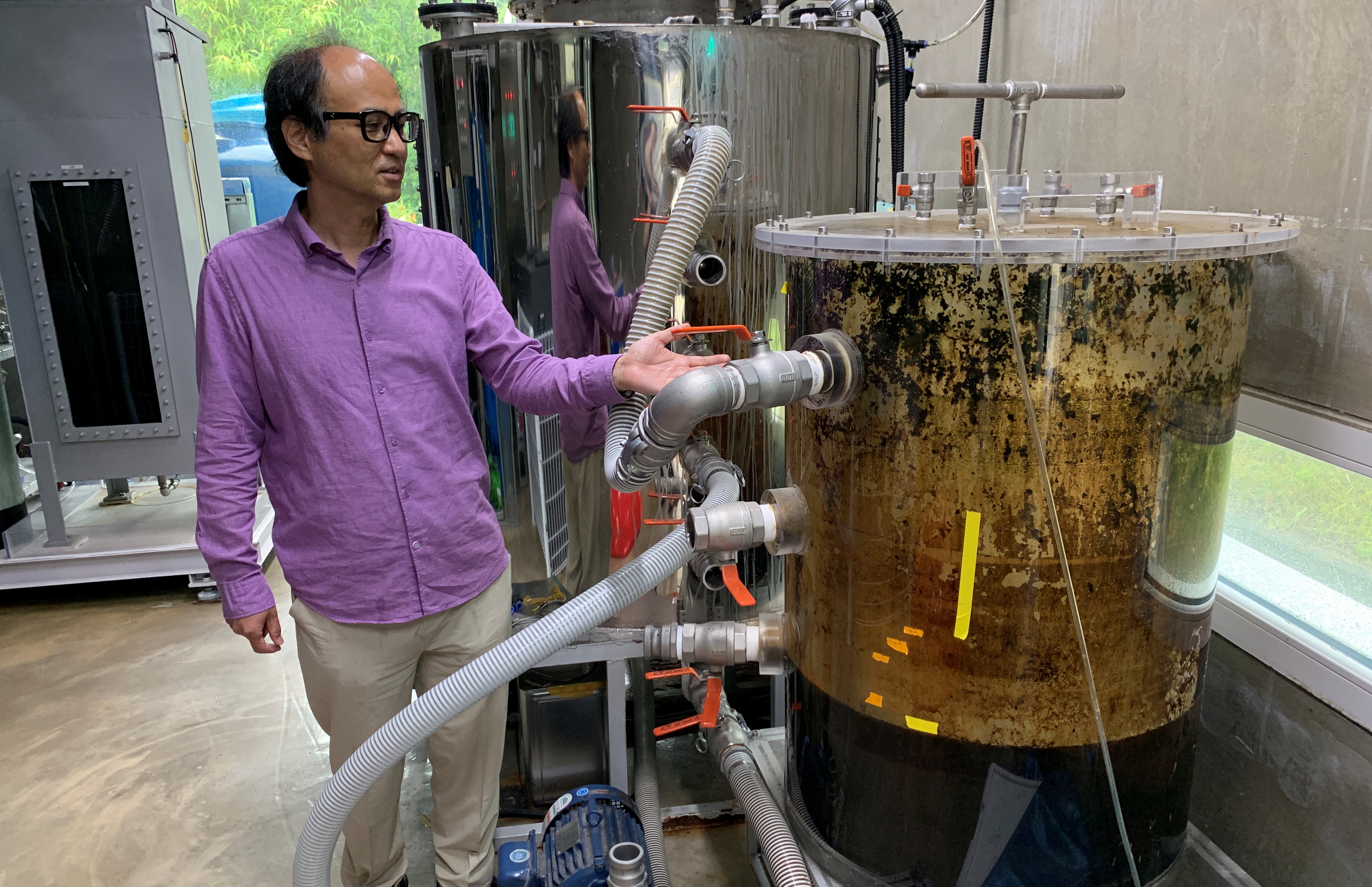
Cho Jae-weon, an urban and environmental engineering professor at the Ulsan National Institute of Science and Technology (UNIST), has designed an eco-friendly toilet connected to a laboratory that uses excrement to produce biogas and manure.
The BeeVi toilet - a portmanteau of the words bee and vision - uses a vacuum pump to send faeces into an underground tank, reducing water use. There, microorganisms break down the waste to methane, which becomes a source of energy for the building, powering a gas stove, hot-water boiler and solid oxide fuel cell.
"If we think out of the box, faeces has precious value to make energy and manure. I have put this value into ecological circulation," Cho said.
<https://cloudfront-us-east-2.images.arcpublishing.com/reuters/CRV6QQSVDJPHB…>
<img src="https://cloudfront-us-east-2.images.arcpublishing.com/reuters/CRV6QQSVDJPHB…" alt="Cho Jae-weon, a South Korean professor at Ulsan National Institute of Science and Technology (UNIST), stands next to a faeces tank at a laboratory in Ulsan, South Korea, July 6, 2021. Picture taken on July 6, 2021. REUTERS/Minwoo Park" title="" />
<https://cloudfront-us-east-2.images.arcpublishing.com/reuters/5BB6EQA5B5IF5…>
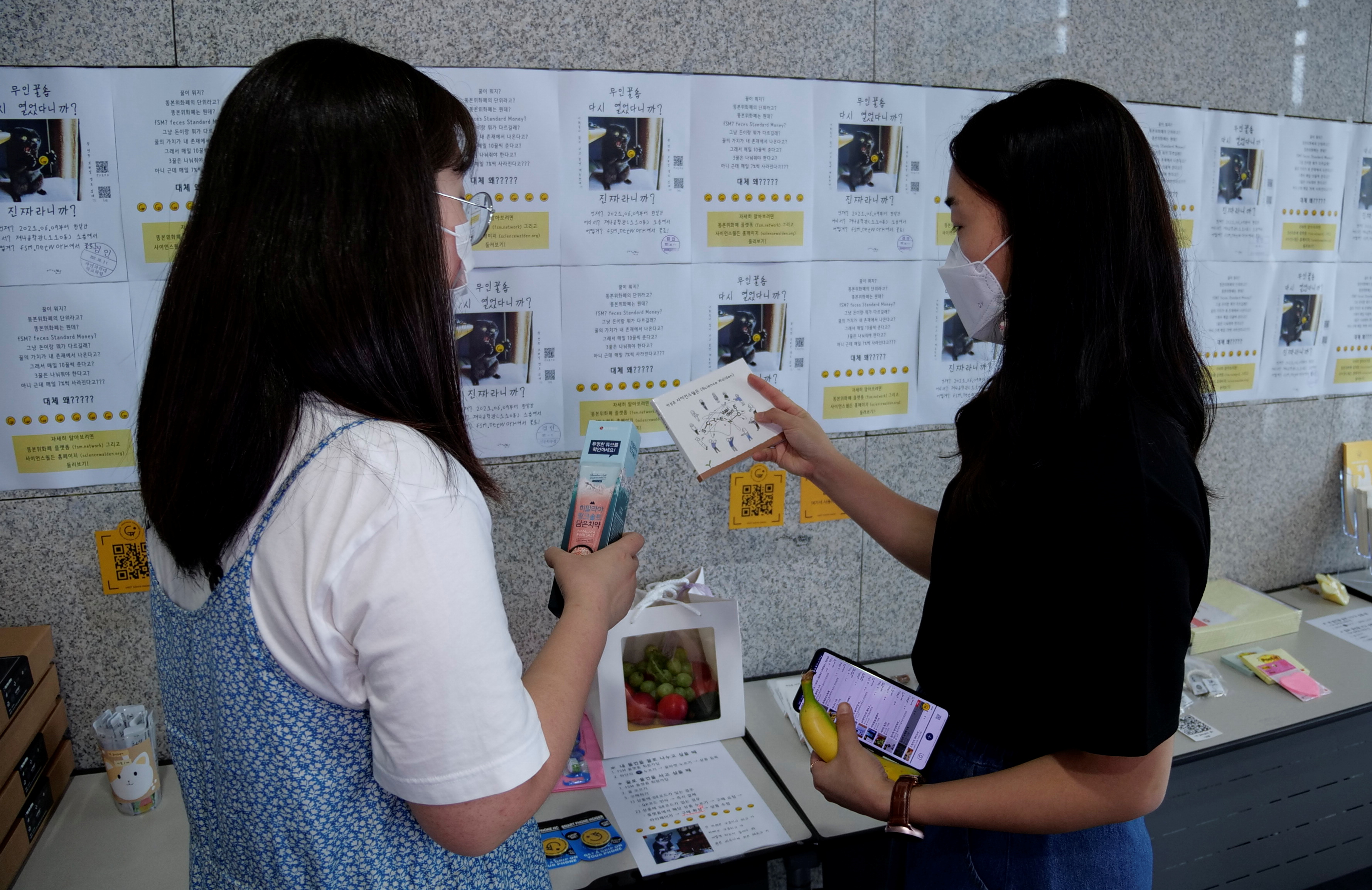
<img src="https://cloudfront-us-east-2.images.arcpublishing.com/reuters/5BB6EQA5B5IF5…" alt="Women take a look at items at a faeces currency market at Ulsan National Institute of Science and Technology (UNIST) in Ulsan, South Korea, July 6, 2021. Picture taken on July 6, 2021. REUTERS/Daewoung Kim" title="" />
<https://cloudfront-us-east-2.images.arcpublishing.com/reuters/CRV6QQSVDJPHB…>
<img src="https://cloudfront-us-east-2.images.arcpublishing.com/reuters/CRV6QQSVDJPHB…" alt="Cho Jae-weon, a South Korean professor at Ulsan National Institute of Science and Technology (UNIST), stands next to a faeces tank at a laboratory in Ulsan, South Korea, July 6, 2021. Picture taken on July 6, 2021. REUTERS/Minwoo Park" title="" />
1/2
Women take a look at items at a faeces currency market at Ulsan National Institute of Science and Technology (UNIST) in Ulsan, South Korea, July 6, 2021. Picture taken on July 6, 2021. REUTERS/Daewoung Kim
An average person defecates about 500g a day, which can be converted to 50 litres of methane gas, the environmental engineer said. This gas can generate 0.5kWh of electricity or be used to drive a car for about 1.2km (0.75 miles).
Cho has devised a virtual currency called Ggool, which means honey in Korean. Each person using the eco-friendly toilet earns 10 Ggool a day.
Students can use the currency to buy goods on campus, from freshly brewed coffee to instant cup noodles, fruits and books. The students can pick up the products they want at a shop and scan a QR code to pay with Ggool.
"I had only ever thought that faeces are dirty, but now it is a treasure of great value to me," postgraduate student Heo Hui-jin said at the Ggool market. "I even talk about faeces during mealtimes to think about buying any book I want."
Reporting by Minwoo Park, Daewoung Kim; Editing by Karishma Singh and Gerry Doyle
Our Standards: <https://www.thomsonreuters.com/en/about-us/trust-principles.html> The Thomson Reuters Trust Principles.
Sent from my iPad 2018