Kolege autori
Verujem da svi znate da ćemo 8. i 9. novembra održati BIZIT konferenciju.
Molim vas da u ovom mesecu i narednom do BIZITA pomognete u promociji konferencije.
Ideja je da u svaku svoju objavu postavite link ka BIZIT sajtu. Na neku ključnu teče koja ima ikakve veze sa temama BIZITA ili da prosto dopiše u svakoj vesti smislenu rečenicu o BIZITU i postavite link. Ta rečenica može biti u smislu: Na BIZIT konferenciji koju ćemo održati početkom novembra, o „ovoj temi“ (koja god da je) će se govoriti iz više uglova...
Ili već neka kontekstualna varijacija na temu.
Nađite najbolji način da kroz svoje tekstove promovišete BIZIT konferenciju.
Ukoliko neko ima ideju kako bismo još mogli da unapredimo ovu promociju, bićemo jako zahvalni da je iznesete.
I molim vas. Čekirajte se da znam ko je na ovoj listi 😊
Ko vidi poruku neka odgovori 😊
Hvala
Pozdrav
Vesna
Vesna Čarknajev
CEO
PC Press | <https://www.google.com/maps/place/%D0%9E%D1%81%D0%BC%D0%B0%D0%BD%D0%B0+%D0%…> Osmana Đikića 4 | 11000 Beograd | Srbija
Tel: +381 11 20 80 220
Mob: +381 63 234 801
E-mail: <mailto:vesna@pcpress.rs> vesna(a)pcpress.rs
<https://pcpress.rs/>
<https://bizit.rs/>
<https://top50.rs/>
<https://play.google.com/store/apps/details?id=com.intellex.pcpress> <https://apps.apple.com/app/id960274093>
<https://www.bbc.com/news/science-environment-63195653> www.bbc.com
/news/science-environment-63195653
Lab-grown brain cells play video game Pong
By Pallab Ghosh5-6 minutes 10/12/2022
DOI: <https://doi.org/10.1016/j.neuron.2022.09.001>
10.1016/j.neuron.2022.09.001,
<chrome-extension://ecabifbgmdmgdllomnfinbmaellmclnh/data/reader/index.html?
id=432525254&url=https%3A%2F%2Fwww.bbc.com%2Fnews%2Fscience-environment-6319
5653> Show Details
_____
Image source, Cortical Labs
Image caption,
These 800,000 lab-grown brain cells can play a 1970s video game, albeit
badly
Researchers have grown brain cells in a lab that have learned to play the
1970s tennis-like video game, Pong.
They say their "mini-brain" can sense and respond to its environment.
<https://doi.org/10.1016/j.neuron.2022.09.001> Writing in the journal
Neuron, Dr Brett Kagan, of the company Cortical Labs, claims to have created
the first ''sentient'' lab-grown brain in a dish.
Other experts describe the work as ''exciting'' but say calling the brain
cells sentient is going too far.
"We could find no better term to describe the device,'' Dr Kagan says. ''It
is able to take in information from an external source, process it and then
respond to it in real time."
Image source, Van Weeden
Image caption,
The human brain is more adaptable and learns faster than current
artificial-intelligence (AI) systems. Could it be a better model for the
next generation of computers?
Mini-brains were first produced in 2013, to study microcephaly, a genetic
disorder where the brain is too small, and have since been used for research
into brain development.
But this is the first time they have been plugged into, and interacted with,
an external environment, in this case a video game.
* grew human brain cells grown from stem cells and some from mouse
embryos to a collection of 800,000
* connected this mini-brain to the video game via electrodes revealing
which side the ball was on and how far from the paddle
Image source, Cortical Labs
Image caption,
Pong is an early computer game where the object is to move the bar on the
left to prevent the small square slipping past - very simple, but very
exciting in 1972
In response, the cells produced electrical activity of their own.
They expended less energy as the game continued.
But when the ball passed a paddle and the game restarted with the ball at a
random point, they expended more recalibrating to a new unpredictable
situation.
The mini-brain learned to play in five minutes.
It often missed the ball - but its success rate was well above random
chance.
Although, with no consciousness, it does not know it is playing Pong in the
way a human player would, the researchers stress.
Beer Pong?
Dr Kagan hopes the technology might eventually be used to test treatments
for neurodegenerative diseases such as Alzheimer's.
"When people look at tissues in a dish, at the moment they are seeing if
there is activity or no activity. But the purpose of brain cells is to
process information in real time," he says. "Tapping into their true
function unlocks so many more research areas that can be explored in a
comprehensive way."
Next, Dr Kagan plans to test the impact alcohol has on the mini-brain's
ability to play Pong.
If it reacts in a similar way to a human brain, this would underscore just
how effective the system might be as an experimental stand-in.
Image source, SPL
Image caption,
The researchers say their mini brains are more adaptable than current AI
systems and so might provide the basis for more adaptable robots
Dr Kagan's description of his system as sentient, however, differs from many
dictionary definitions, which state it means having the capacity to have
feelings and sensations.
Cardiff Psychology School honorary research associate Dr Dean Burnett
prefers the term ''thinking system''.
''There is information being passed around and clearly used, causing
changes, so the stimulus they are receiving is being 'thought about' in a
basic way,'' he says.
The mini-brains are likely to become more complex as the research progresses
- but Dr Kagan's team are working with bioethicists to ensure they do not
accidentally create a conscious brain, with all the ethical questions that
would raise.
"We have to see this new technology very much like the nascent computer
industry, when the first transistors were janky prototypes, not very
reliable - but after years of dedicated research, they led to huge
technological marvels across the world," he says.
Artificial-intelligence (AI) researchers have already produced devices that
can beat grandmasters at chess.
But Prof Karl Friston, of University College London, who is working with Dr
Kagan, says: "The mini-brain learned without it being taught and so is more
adaptable and flexible."
Hear more from the team behind this breakthrough on
<https://www.bbc.co.uk/programmes/m001cxxv> Inside Science on BBC Sounds.
More on this story
Related Internet Links
*
*
The BBC is not responsible for the content of external sites.
From: Dejan Ristanovic <dejan(a)ristanovic.com>
Sent: Monday, August 8, 2022 2:26 PM
Subject: Self-healing coating repairs car scratches with 30 minutes of sunlight
https://newatlas.com/materials/self-healing-coating-30-minutes-sunlight/
Self-healing coating repairs car scratches with 30 minutes of sunlight
Finding a scratch on your car is a special kind of heartbreak, but in the future they might be gone before you even notice. Scientists in Korea have developed a coating that self-heals scratches in as little as 30 minutes when exposed to sunlight.
The new coating contains a polymer network based on acryl polyol, with what’s called a hindered urea structure. Essentially, the polymers have dynamic chemical bonds that can break apart in response to a stimulus and then reform in their original arrangement, effectively repairing minor damage like scratches. In this case the trigger is heat, which is provided by an organic photothermal dye that captures infrared light, also embedded in the coating.
In tests on a model car, the team showed that the coating healed scratches in 30 minutes of midday sunlight. In theory, that means someone could key your car door and the scratch could be gone before you come back.
If half an hour is too long, the team also demonstrated that the process can be drastically sped up under concentrated light. Using a magnifying glass to focus sunlight onto the mark patched it up in under 30 seconds.
<https://assets.newatlas.com/dims4/default/51d08fb/2147483647/strip/true/cro…>
A diagram illustrating how the new self-healing coating works
Korea Research Institute of Chemical Technology (KRICT)
The team says the new coating has a few advantages over existing <https://newatlas.com/kit-self-healing-polymer/31618/?itm_source=newatlas&it…> self-healing coatings. Using organic photothermal dyes means it needs far less energy to work than regular inorganic versions, which usually require heat guns or <https://newatlas.com/new-polymers-self-heal-scratches-in-uv-light/18468/?it…> concentrated UV lights. Others, like <https://newatlas.com/nissan-develops-self-repairing-paint/4897/?itm_source=…> Nissan’s Scratch Shield, work under gentler conditions but can take up to a week. The new coating can also repair a scratch in the same location multiple times, unlike self-healing materials that work using <https://newatlas.com/military-vehicles-self-healing-paint/31296/?itm_source…> bursting capsules of resin.
Importantly, the new coating is transparent, so it won’t mess with the color of the paint job, and can be applied using existing spray-coating methods. While cars are the primary use case, the team says it could also be applied to other often-scratched devices like phones or building materials.
The research was published in the journal <https://pubs.acs.org/doi/10.1021/acsapm.1c01768> ACS Applied Polymer Materials. The team demonstrates the self-healing coating in the video below.
Self-healing of model car coated with developed clearcoat when exposed to focused sunlight
Source: <https://www.eurekalert.org/news-releases/961036> Eurekalert
Sent from my iPad
Možda zanimljivo za tekst na sajtu...
https://petapixel.com/2021/12/28/canon-confirms-weve-seen-its-last-flagship…
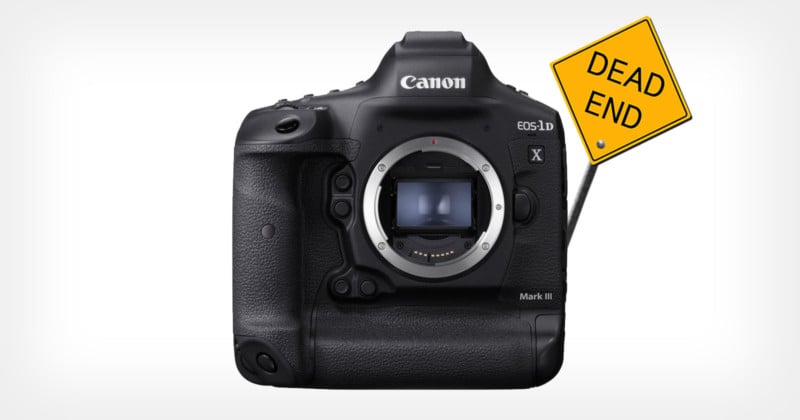
Canon Confirms We’ve Seen Its Last Flagship DSLR
Dec 28, 2021
<https://petapixel.com/assets/uploads/2021/12/canon-1d-x-mark-iii-last-flags…>
The age of Canon DSLRs is rapidly coming to an end. Canon has officially confirmed that the <https://www.adorama.com/ica1dxm3.html?kbid=67085> Canon 1D X Mark III will be its last flagship DSLR camera as it turns its attention toward a future of mirrorless cameras.
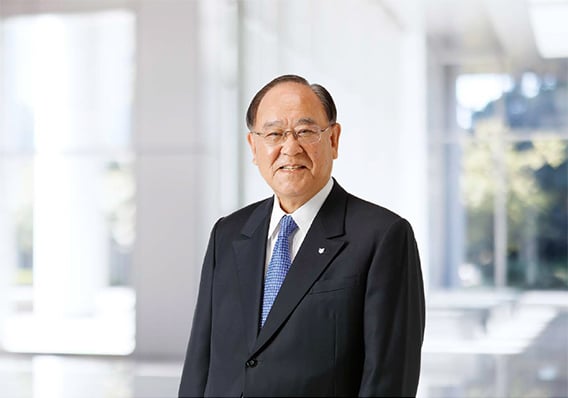
The Statement by Canon CEO Fujio Mitarai
In a new <https://www.yomiuri.co.jp/economy/20211228-OYT1T50000/2/> interview with Japanese newspaper Yomiuri Shimbun, one of the five major newspapers of Japan, Canon Chairman and CEO Fujio Mitarai stated that the company’s development and production of flagship DSLRs will be wound down “within a few years.”
“Canon’s SLR flagship model is known as the ‘EOS-1’ series, the first of which appeared in 1989,” the article states. “The latest model ‘EOS-1D X Mark III’ released in 2020 will be the last model in fact.”
“The market needs are acceleratingly shifting to mirrorless cameras,” Mitarai states in the interview. “In line with this, we are steadily shifting people. […]
“Demand for beginner and intermediate SLR cameras is strong overseas, so we plan to continue development and production for the time being.”
<https://petapixel.com/assets/uploads/2021/12/canon-ceo-Fujio-Mitarai-.jpg> Canon CEO Fujio Mitarai. Photo via Canon’s official website.
The <https://petapixel.com/2020/01/06/canon-unveils-the-1d-x-mark-iii-its-new-ul…> Canon 1D X Mark III was announced in January 2020 with a price tag of $6,499, and it continues to be a popular choice among professional photographers at major media outlets. Canon’s service facility at the Tokyo 2020 Olympics in Japan was <https://petapixel.com/2021/07/30/inside-canons-impressively-stocked-olympic…> stocked with row after row of the flagship DSLR.
The Last ‘Flagship’ DSLR Camera
While some publications such as <https://ymcinema.com/2021/12/28/canons-chairman-and-ceo-fujio-mitarai-eos-1…> Y.M.Cinema and <https://photorumors.com/2021/12/28/the-eos-1d-x-mark-iii-is-the-last-dslr-c…> Photo Rumors have interpreted Mitarai’s words to mean Canon has officially revealed the end of all of its DSLR lines, Canon has confirmed that the scope of Mitarai’s statement only extends to its flagship DSLR.
“As reported in the article, we plan to make future flagship models strictly mirrorless cameras,” Canon says in a statement provided to PetaPixel. “Naturally, we are considering an RF mount camera as our next flagship model.”
There are also no exact dates yet as to when the production of Canon’s flagship DSLR will come to a close.
“The broad details of Mr. Mitarai’s interview as described in the article are true,” a Canon spokesperson tells PetaPixel. “However, while estimated as ‘within a few years,’ exact dates are not confirmed for the conclusion of development/termination of production for a flagship DSLR camera.”
We’ve Likely Seen the Last Canon DSLR
Canon may not have officially confirmed the end of all its DSLR lines in Mitarai’s statement, but Canon has been reiterating the fact that it sees its RF mirrorless camera mount as its future. The company stated in January 2020 that it is <https://petapixel.com/2020/01/08/canon-done-making-ef-lenses-unless-photogr…> done making EF lenses unless the market demands more, and there has been <https://petapixel.com/2021/03/31/canon-appears-to-be-rapidly-discontinuing-…> a steady stream of popular EF lenses being discontinued since then.
There has also not been any new EOS DSLR announced since <https://petapixel.com/2020/02/12/canon-unveils-rebel-t8i-dslr-with-eye-af-a…> the Rebel T8i (AKA 850D) was unveiled in February 2020, and there is no word that Canon has any plans to release any more.
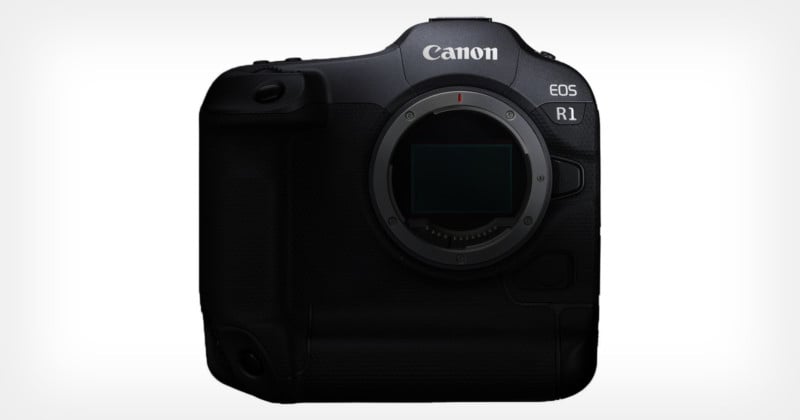
On the mirrorless front, however, Canon is making huge investments and ambitious plans. The company has rapidly been bringing popular DSLR lens focal lengths into the world of the RF mount, and the upcoming EOS R1 flagship mirrorless camera <https://petapixel.com/2021/11/02/canon-eos-r1-to-be-a-jack-of-all-trades-ma…> will reportedly be a “jack of all trades, master of everything.”
<https://petapixel.com/assets/uploads/2021/11/canoneosr1mockupfeat-800x420.j…>
PetaPixel recently <https://petapixel.com/2021/12/22/petapixels-bold-camera-predictions-for-202…> predicted that both Canon and Nikon are done making new DSLR cameras, and given how fully invested the rivals are in winning the mirrorless camera market, it would be quite surprising if either company released a new model going forward.
Sent from my iPad 2018
Dragi ljudi,
da li još neko večeras ima ovaj problem? Šta kod uradim dobijem sledeće:
[image: Image 2443.jpg]
Na momente radi, ali šta god treba da se uradi, izbacuje ovaj error.
Nadam se da je samo trenutno prirode...
Pozdrav,
N.
Dobra ideja!
From: Dejan Ristanovic <dejan(a)ristanovic.com>
Sent: Tuesday, January 4, 2022 12:39 PM
Subject: Samsung’s new TV remote uses radio waves from your router to stay charged - The Verge
https://www.theverge.com/2022/1/2/22860390/samsung-eco-remote-2022-solar-rf…
Samsung’s new TV remote uses radio waves from your router to stay charged
<https://www.theverge.com/authors/chris-welch> Chris WelchJan 2, 2022, 9:00pm EST
<https://cdn.vox-cdn.com/thumbor/uRFG-udBIpzjkC0wZjVqDYLMxWE=/0x0:2040x1242/…> Image; Samsung
CES is always a moment when companies reiterate their dedication to environmental causes and trumpet their latest, more efficient products and packaging. After introducing a solar-powered Eco Remote for its 2021 TVs, Samsung is back again with a new version that comes with a pretty fascinating trick.
Like the previous Eco Remote, this one can be charged with solar energy, but Samsung has also added RF harvesting capabilities that let the remote preserve its charge by “collecting routers’ radio waves and converting them to energy.” Neat. You don’t see this in many gadgets — mostly because it’s really only practical for low-power devices. But remotes certainly fall into that category.
Aside from the new RF harvesting option, the Eco Remote can be charged from both outdoor and indoor light or (for the fastest results) over USB-C. Samsung says it’s introducing a white model of the remote this year, which the company says is meant to better complement its “lifestyle” TVs like The Frame, Serif, and Sero.
As with the original remote, the intention here is to ditch AAA batteries. <https://news.samsung.com/global/preserving-our-planet-2-making-tv-accessori…> Samsung has previously estimated that switching to solar-powered remotes could avoid 99 million discarded batteries over the course of seven years. It has also explored other ways of self-charging the internal battery such as “harnessing the kinetic energy that’s created when the remote is shaken” and “using the vibrational energy that’s created when the microphone picks up sounds.” But this time around it settled on adding RF harvesting as another way to keep the clicker functioning whenever you need it.
Sent from my iPad 2018